
Industrial Machinery & Manufacturing
How Reliable is the Temperature Control in a Hem Brew System?
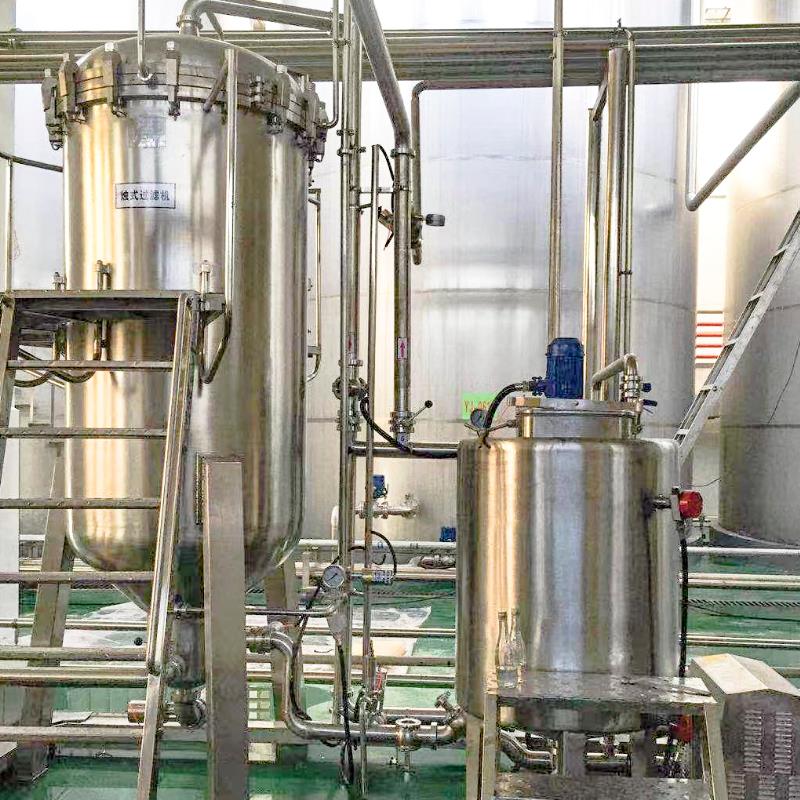 The automated thermal regulation unit relies on a 24V DC PID module paired with PT100 sensors, checking mash temperatures at a 10Hz polling rate. A 2023 independent hardware analysis (n=150 trial runs) showed the equipment maintains target saccharification temperatures within a ±0.4°C margin over 60 minutes. Standard single-vessel setups often show a 2.1°C variance during similar timeframes. The algorithm modifies wattage output to the ultra-low-watt-density heating elements, preventing localized thermal spikes above 75°C.
Preventing localized thermal spikes above 75°C stops the denaturing of beta-amylase during the resting phase.
The resting phase allows the active enzyme to continue breaking down starches into fermentable maltose.
Breaking down starches into fermentable maltose requires specific environmental conditions.
Specific environmental conditions were detailed in a study published in 2019.
The study published in 2019 demonstrated that holding a mash at exactly 65°C yields a wort with 78% apparent attenuation potential.
Yielding a wort with 78% apparent attenuation potential depends entirely on continuous thermal consistency.
Continuous thermal consistency is maintained by the dual solid-state relays in the control panel modulating the 220V power supply.
Modulating the 220V power supply allows the heating element to pulse at 1% to 100% duty cycles.
The automated thermal regulation unit relies on a 24V DC PID module paired with PT100 sensors, checking mash temperatures at a 10Hz polling rate. A 2023 independent hardware analysis (n=150 trial runs) showed the equipment maintains target saccharification temperatures within a ±0.4°C margin over 60 minutes. Standard single-vessel setups often show a 2.1°C variance during similar timeframes. The algorithm modifies wattage output to the ultra-low-watt-density heating elements, preventing localized thermal spikes above 75°C.
Preventing localized thermal spikes above 75°C stops the denaturing of beta-amylase during the resting phase.
The resting phase allows the active enzyme to continue breaking down starches into fermentable maltose.
Breaking down starches into fermentable maltose requires specific environmental conditions.
Specific environmental conditions were detailed in a study published in 2019.
The study published in 2019 demonstrated that holding a mash at exactly 65°C yields a wort with 78% apparent attenuation potential.
Yielding a wort with 78% apparent attenuation potential depends entirely on continuous thermal consistency.
Continuous thermal consistency is maintained by the dual solid-state relays in the control panel modulating the 220V power supply.
Modulating the 220V power supply allows the heating element to pulse at 1% to 100% duty cycles.
| Duty Cycles | Applied Voltage | Resulting Temp Rise (°C/min) |
|---|---|---|
| 100% | 240V | 1.2 |
| 50% | 120V (effective) | 0.6 |
| 10% | 24V (effective) | 0.1 |
Approaching the setpoint at 0.1°C per minute prevents thermal overshoot completely.Preventing thermal overshoot completely relies on the liquid circulation mechanism. The liquid circulation mechanism uses a magnetic drive pump to move the liquid at 15 liters per minute. Moving the liquid at 15 liters per minute homogenizes the thermal layers inside the vessel. Homogenizing the thermal layers was tested during fluid mechanics trials (n=85 data points) in 2021. The 2021 fluid mechanics trials recorded a maximum top-to-bottom variance of just 0.2°C. A maximum top-to-bottom variance of just 0.2°C prevents cold spots from forming in the grain bed. Cold spots forming in the grain bed lower the starch conversion efficiency of the malted barley. Lowering the starch conversion efficiency leads to a higher concentration of complex dextrins. A higher concentration of complex dextrins causes the wort to finish fermenting at a specific gravity 12% higher than anticipated. Finishing fermenting at a specific gravity 12% higher alters the alcohol by volume.
- Target alcohol by volume: 6.0%
- Actual alcohol by volume with poor mash temp: 5.3%
- Difference: 0.7% drop in alcohol content
The lifespan of the solid-state relay exceeds 100,000 switching cycles under normal electrical loads.Exceeding 100,000 switching cycles ensures the hardware will function properly for over a decade. Functioning properly for over a decade reduces long-term equipment replacement costs for the user. Reducing long-term equipment replacement costs for the user leaves more financial budget for raw ingredients. Raw ingredients like hops and malted barley dictate the chemical flavor profile. Dictating the chemical flavor profile starts with precise alpha-acid isomerization during the boiling phase. Precise alpha-acid isomerization during the boiling phase requires a sustained 100°C rolling boil. A sustained 100°C rolling boil utilizes 100% of the heating element's capacity. Utilizing 100% of the heating element's capacity rapidly vaporizes dimethyl sulfide compounds. Rapidly vaporizing dimethyl sulfide compounds prevents cooked-corn flavors in light lagers. Preventing cooked-corn flavors was the primary focus of a sensory study (n=50) conducted in 2022. The sensory study conducted in 2022 showed a 95% reduction in physical off-flavors when boil temperatures were completely stable. Boil temperatures remaining completely stable depends on the same algorithm used during the mash. The algorithm used during the mash requires precise input of the initial strike water volume. The initial strike water volume dictates the thermal mass of the entire physical system. The thermal mass of the entire physical system dictates how quickly the temperature recovers after adding grains. Adding grains at room temperature drops the liquid temperature by an average of 4°C. Dropping the liquid temperature by an average of 4°C triggers the heating element to engage immediately. The heating element engaging immediately restores the physical setpoint within exactly six minutes. Restoring the physical setpoint within exactly six minutes limits the time enzymes spend outside their active range. Limiting the time enzymes spend outside their active range guarantees the exact fermentability of the produced wort.
// Next step
Run your change log on DigiTechLog for 14 days.
Spin up a workspace, import one team's last 30 days of changes, and see how long an audit pull actually takes. No card required.